
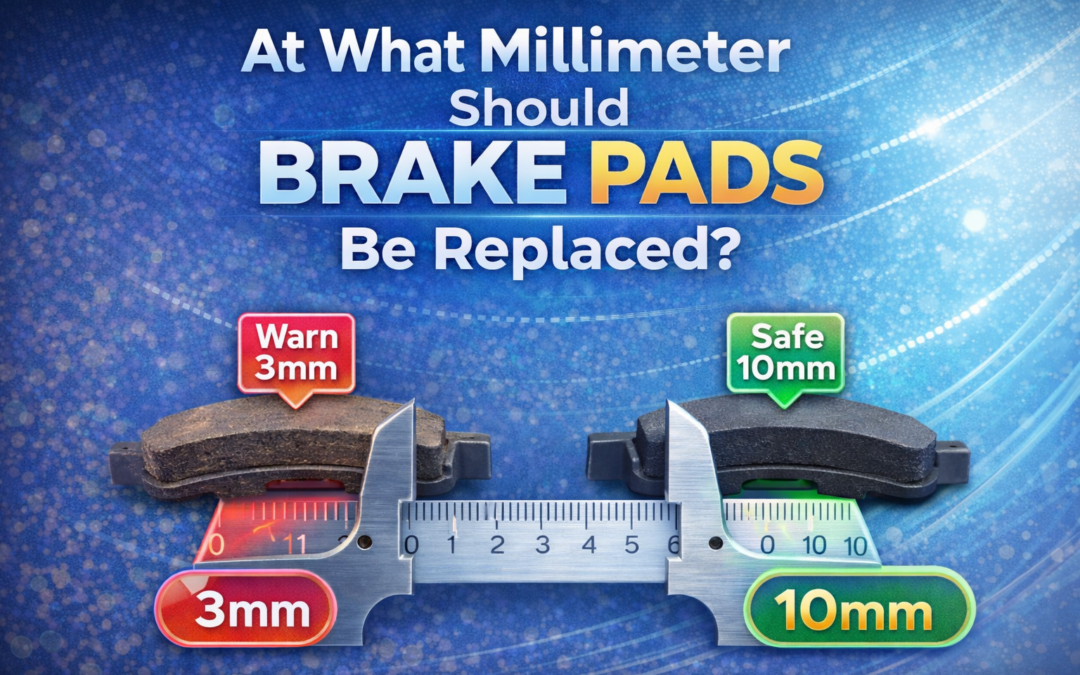
When you ask what millimeter should brake pads be replaced, you are really asking how thin is too thin for safe braking. Your brake pads are the primary friction component that presses against the rotor to slow your vehicle, and their thickness directly affects stopping power.
In this post, you will learn the exact millimeter thresholds, warning signs, lifespan data, and inspection techniques so you can make confident, safety-first decisions before damage occurs.
Understanding Brake Pad Thickness in Millimeters
Brake pad thickness refers to the depth of the friction material bonded to the metal backing plate. When new, most passenger vehicle brake pads measure between 10 mm and 12 mm of usable friction material. As you drive, that material gradually wears down through heat and friction generated every time you press the brake pedal.
Manufacturers and service professionals commonly agree that 3 mm is the critical replacement point for most vehicles. Once your pads reach 3 mm, braking performance begins to decline, heat builds more quickly, and the risk of rotor damage increases. If you allow pads to wear below 2 mm, you are approaching metal-to-metal contact, which can dramatically increase repair costs and compromise safety.
The Industry Standard Replacement Point
The direct answer to what millimeter should brake pads be replaced is typically at 3 mm or less. At 4 mm, many technicians will recommend planning for replacement soon, especially if you drive in heavy traffic or mountainous terrain. At 3 mm, replacement is strongly advised because the remaining friction material offers limited heat resistance and reduced stopping margin.
If your pads measure under 3 mm, you should schedule service immediately to avoid rotor scoring. Grinding noises at this stage often indicate that the friction material is nearly gone. Replacing pads before metal contact saves you from replacing rotors prematurely.
Why 3 Millimeters Is the Safety Threshold
Three millimeters may sound small, but it represents the final safe buffer of friction material. During emergency braking, your pads must withstand extreme heat and pressure, and thin pads cannot dissipate heat effectively. Excess heat increases the likelihood of brake fade, vibration, and rotor warping.
When friction material becomes too thin, the metal backing plate can contact the rotor surface. This contact produces a harsh grinding sound and rapidly damages the rotor face. Once this happens, a simple pad replacement may escalate into a more expensive pad-and-rotor service.
Typical Brake Pad Lifespan in Miles
Brake pad lifespan varies widely depending on driving habits and conditions. Many drivers in the United States see replacement intervals between 30,000 and 70,000 miles, but urban stop-and-go traffic often shortens that range significantly. Highway driving with gradual braking can extend pad life closer to 70,000 or even 80,000 miles in lighter vehicles.
Aggressive braking, towing, and heavy SUVs accelerate wear because more friction is required to slow additional weight. Electric vehicles can also wear pads differently due to regenerative braking systems, though weight still plays a role. Ultimately, millimeter thickness is more reliable than mileage when determining replacement timing.
Warning Signs That Your Pads Are Too Thin
Your vehicle often gives clear signals before pads reach a dangerous level. Recognizing these symptoms early protects your rotors and ensures predictable stopping performance. Pay attention to the following warning signs:
- High-pitched squealing during braking
- Grinding or growling noises
- Vibration in the brake pedal
- Increased stopping distance
- Brake warning light activation
Squealing typically indicates a wear indicator contacting the rotor around the 3 mm mark. Grinding suggests the friction material may already be worn through. If you experience vibration or pulling to one side, you should have the system inspected immediately.
How to Measure Brake Pad Thickness
You can measure brake pad thickness visually if your wheel design allows clear access through the spokes. Look between the brake caliper and rotor and identify the friction material pressed against the rotor surface. If the pad appears thinner than 1/4 inch, which equals approximately 6.35 mm, you should inspect more closely.
For accurate measurement, remove the wheel and use a ruler or digital caliper to check the friction material only, not the backing plate. If you need to convert millimeters to inches for comparison, you can use tools like convert millimeters to inches at convert millimeters to inches to ensure measurement precision. This conversion is helpful because many brake specifications in the United States still reference inches.
Converting Measurements for Better Accuracy
Brake pad specifications sometimes appear in both metric and imperial systems. Understanding the relationship between these systems ensures you interpret service recommendations correctly. For example, 3 mm equals roughly 0.12 inches, which is just under one-eighth of an inch.
If you want a deeper understanding of how these conversions work mathematically, you can review what is the conversion factor from millimeters to inches at what is the conversion factor from millimeters to inches, which explains the 25.4 conversion constant. Knowing that 1 inch equals 25.4 mm helps you double-check shop measurements and manufacturer guidelines. This knowledge strengthens your decision-making when evaluating brake service recommendations.
How Driving Style Affects Millimeter Wear
Your braking habits directly influence how quickly pads wear down from 12 mm to 3 mm. Frequent hard braking generates higher temperatures and accelerates material loss. Anticipating traffic flow and braking gradually reduces heat stress and extends pad life.
Urban commuting with constant stops can wear pads twice as fast as steady highway travel. Carrying heavy loads or driving in mountainous areas further increases wear rates. By adopting smoother braking techniques, you can slow the millimeter-by-millimeter reduction of your friction material.
The Role of Brake Pad Materials
Brake pads come in several material types, each affecting wear characteristics. Organic pads are quieter and more affordable but often wear faster than other options. Semi-metallic pads offer strong stopping performance and durability but may wear rotors more aggressively.
Ceramic pads typically provide longer lifespan, cleaner wheels, and quieter operation, though they cost more upfront. Material choice influences how quickly pads drop from 10 mm to 3 mm under similar conditions. When selecting replacement pads, balance performance, noise tolerance, and long-term cost.
What Happens If You Delay Replacement
Ignoring thin brake pads can trigger a chain reaction of damage. Once friction material disappears, the metal backing plate grinds directly against the rotor, carving grooves into its surface. This damage often requires rotor resurfacing or full replacement.
Driving with excessively worn pads also increases stopping distance, which raises collision risk. Brake fade becomes more likely under repeated hard stops because thin pads overheat faster. Replacing pads at 3 mm prevents these complications and preserves your braking system’s integrity.
Brake Pads Versus Brake Rotors
Brake pads and rotors wear together, but they do so at different rates. Rotors can last up to 70,000 or even 80,000 miles depending on driving conditions, though thickness specifications vary by manufacturer. Pads typically require replacement two or more times before rotors need attention.
Understanding dimensional relationships can help you compare component wear, much like learning information like is a centimeter bigger than a millimeter clarifies scale differences in measurement. Recognizing these size relationships reinforces why 3 mm is such a small but critical margin. Small dimensional changes can have significant mechanical consequences in braking systems.
Professional Inspection Versus DIY Checks
While you can visually inspect pads, professional inspections provide a more thorough assessment. Technicians evaluate not only pad thickness but also rotor condition, caliper function, and brake fluid integrity. They can identify uneven wear patterns that may signal alignment or hydraulic issues.
If you notice squealing, grinding, or a soft brake pedal, schedule service immediately rather than relying solely on visual checks. Regular inspections during tire rotations ensure your pads never drop below the 3 mm safety threshold unnoticed. Preventive inspections cost far less than emergency brake repairs.
When to Replace Brake Pads in Summary
The answer to what millimeter should brake pads be replaced remains clear and consistent across most passenger vehicles. You should plan replacement at 4 mm and replace definitively at 3 mm or below to maintain safe stopping performance. Monitoring thickness rather than mileage ensures you act based on real wear conditions instead of estimates.
By measuring accurately, converting units correctly, and responding to warning signs early, you protect both your safety and your wallet. Brake pads are relatively affordable compared to the damage caused by neglect. Replacing them at the proper millimeter threshold keeps your vehicle reliable, responsive, and safe on American roads.
Conclusion
Knowing what millimeter should brake pads be replaced gives you a precise benchmark instead of a vague guess. When pads reach 3 mm, they have entered the final stage of safe operation, and postponing service increases risk and repair costs. By monitoring thickness regularly, understanding measurement conversions, and responding to warning signs immediately, you maintain full braking confidence in daily driving and emergency situations.
You should treat brake pad replacement as a proactive safety investment rather than a reactive repair. Acting at the correct millimeter threshold preserves rotor life, maintains stopping efficiency, and supports consistent performance under pressure. With accurate measurement, informed decision-making, and timely service, you ensure your vehicle remains dependable every time you press the brake pedal.